
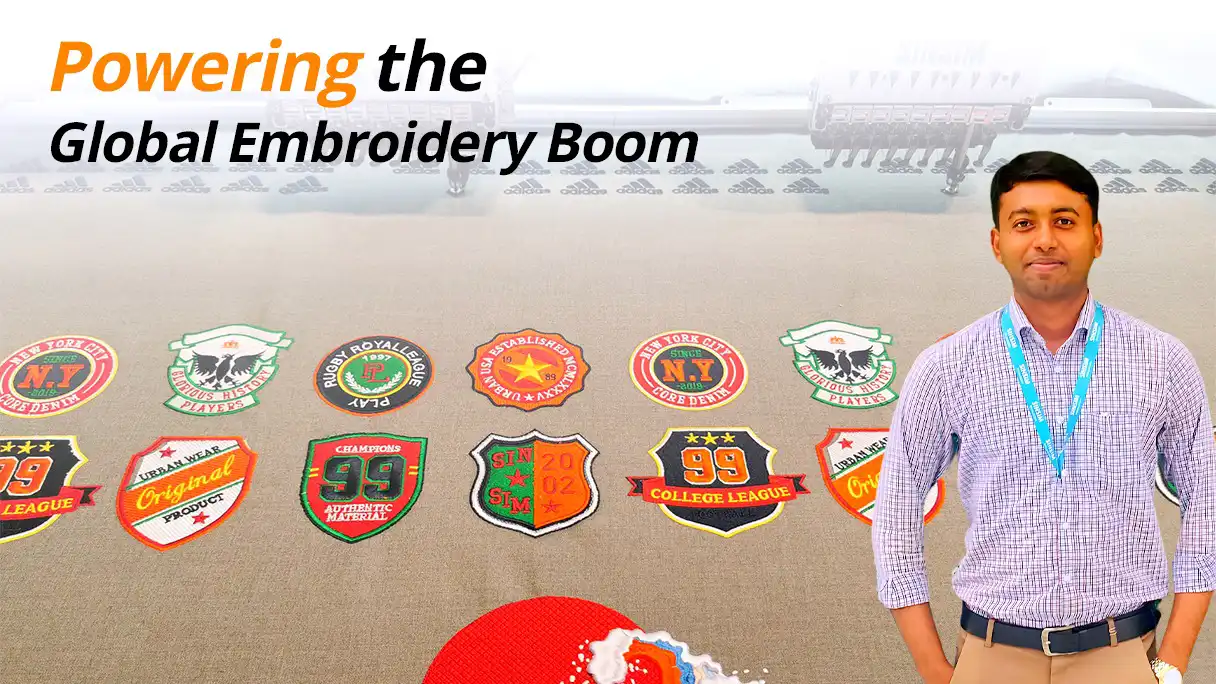
SINSIM: Powering the Global Embroidery Boom — Market Growth & Competitive Edge
The global embroidery industry has entered a phase of steady, technology-driven growth — and SINSIM, a major player in computerized embroidery machinery, is positioned to benefit. From factory-scale production lines to single-head machines for smaller workshops, SINSIM’s product range, manufacturing capacity, and export footprint have contributed to its growing influence in markets across Asia, Africa, Europe, and beyond.
Market at a glance — strong, steady growth
Industry research shows the embroidery/digital embroidery machine market expanding steadily over the next decade. Recent market reports estimate the global embroidery-machine market in the mid-single-billion USD range today, with forecasts projecting multi-billion valuations by the early 2030s and CAGRs in the ~3–6% range depending on the report and exact segment (industrial vs. digital). These growth drivers include rising apparel personalization, automation adoption in garment factories, and government support for textile manufacturing in key producing countries.
Why this matters for SINSIM: as overall demand for automated, high-speed and digitally controlled embroidery equipment rises, manufacturers with strong production capability and distribution channels — like SINSIM — can scale sales and market share.
SINSIM’s strengths — evidence of growing dominance
-
Manufacturing scale & capacity — SINSIM’s parent operations (Xinsheng / Zhejiang Xinsheng Technology) report large, modern production facilities and the capacity to produce thousands of units annually, enabling rapid fulfillment for global orders and competitive pricing for factory deployment. This manufacturing scale is a key competitive advantage in a volume-driven segment.
-
Broad product range for diverse needs — SINSIM offers single-head, multi-head, flat, tubular, and speciality machines (e.g., chenille, sequin, tufting), which helps them serve small businesses, medium factories, and large apparel manufacturers — increasing addressable market. Product listings and dealer pages emphasize flat and cap machines plus parts and after-sales service.
-
Export & trade activity — Local industry news and company updates point to SINSIM being a notable exporter within Zhejiang province (a major textile-machinery export region) and participating in international trade shows and exhibitions — actions that expand market presence and brand recognition globally.
-
Presence in multiple markets — Distributor websites and regional sites (e.g., SINSIM Bangladesh, SINSIM America) show active dealer networks, promotions, and stock availability in many countries — a sign of widened distribution and adoption.
Market context & numbers you can quote
-
Global embroidery-machine market size estimates vary by report, but reputable sources put the market in the ballpark of USD 0.5–1 billion in the mid-2020s, with projections to rise toward USD 2 billion 2030s depending on the forecast horizon and segmentation. (Verified Market Reports, Mordor Intelligence)
-
The digital-embroidery subsegment is forecasted to grow faster than traditional segments in many reports (driven by personalization, automation, and software integration), creating room for brands that invest in R&D and intelligent manufacturing. This tailwind benefits large OEMs and exporters that can deliver feature-rich machines and parts.
What this means for buyers and the Bangladesh market
Bangladesh — as a major garment-exporting nation — is rapidly adopting modern garment and embroidery technology to increase productivity and meet global buyer standards. SINSIM’s active presence in Bangladesh (local dealers, ready stock claims, and participation in regional exhibitions) positions it as a practical supplier for RMG (ready-made garment) factories looking to scale or modernize embroidery capacity. Faster delivery, local parts availability, and on-ground service are decisive factors — and dealer networks are where SINSIM appears focused.
Competitive landscape: established Japanese and European brands (e.g., Brother, Tajima) remain strong in premium/high-precision niches; SINSIM competes strongly on breadth, price, and volume and committed to keep investing in reliability and service to win long-term share.
SINSIM’s likely trajectory
Given global market growth for embroidery equipment, SINSIM’s substantial manufacturing footprint, broad product range, and expanding global dealer presence, the company appears well positioned to grow its market share in the coming years — especially in volume-driven markets and factory modernization projects. For garment manufacturers and embroidery businesses, SINSIM offers scalable options that align with rising demand for automation and on-demand personalization.